
Reviewed · COOKING CLASSES
New Malaysian Kitchen Cooking Class and Garden Tour
Malaysian food makes more sense when you can see the leaves, roots, and spices before they reach the wok. At this four-hour class, Sara Khong welcomes you into her family home, leads you through a garden with more than 50 edible plants, and teaches five Malaysian dishes from a real kitchen. The small group, capped at six, keeps the lesson personal.
I like the direct link between garden and plate, especially when you touch, smell, and taste ingredients such as turmeric and curry leaves before cooking. I also like that Sara is a cookbook author who teaches patiently, while her mother adds the warmth of a lived-in family setting. The main drawback is the price: at $150 per person, this costs more than a standard group cooking class, and the weekday morning schedule may not suit every Kuala Lumpur visit.
Key points to know before booking
- A real family-home setting: You cook in Sara’s actual Malaysian kitchen rather than in a large commercial school.
- A garden with more than 50 edible plants: The opening tour connects familiar dishes with the herbs, spices, flowers, and vegetables behind them.
- Five dishes, made hands-on: You choose five Malaysian foods and prepare them with guidance, rather than simply watching a demonstration.
- A maximum of six people: The small class allows Sara to give close attention to each cook.
- A meal at the end: You sit down to eat what you prepared and talk about Malaysian food and daily life.
- A useful take-home lesson: A recipe booklet helps you recreate the dishes after returning home.
A Malaysian kitchen, not a staged demonstration
This experience begins at New Malaysian Kitchen in Taman Len Seng, about 20 minutes from central Kuala Lumpur. The setting is a neighborhood home, which gives the class a different feel from a hotel activity or a purpose-built teaching kitchen.
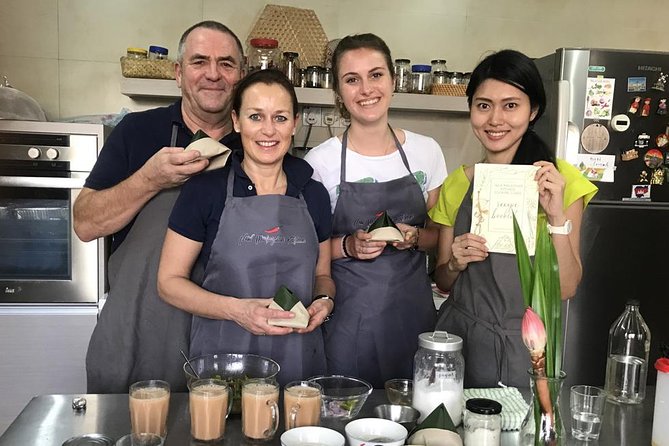
Sara Khong, a professional cook and author of four Malaysian cookbooks, hosts the class. Her mother may also be part of the welcome and cooking session, adding a family touch that many visitors value. You are not simply watching a chef prepare lunch. You work through the ingredients and methods yourself.
That distinction matters. A demonstration can be enjoyable, but it is easy to forget the steps once you leave. Here, you handle the food, follow the preparation, and learn how the dishes come together. If you are new to Malaysian cooking, Sara’s clear explanations and patient approach should make the process less intimidating.
The group limit is six people in total. That is small enough for Sara to correct a technique, answer a question, or adjust the pace when someone has little cooking experience. It also means the atmosphere can feel social without turning into a loud class where everyone is trying to see the same counter.
More cooking classes in Kuala Lumpur:
- LaZat Malaysian Cooking Class
★ 5.0 · 87 reviews - Malaysia Cooking Classes With Local
★ 5.0 · 87 reviews - Market Visit & Private Hands-on Cooking Class at Daun Senja
★ 5.0 · 51 reviews
Flower tea and the edible garden
The morning starts with a glass of flower tea. It is a gentle beginning, giving you time to meet the host and settle into the home before the practical work starts.
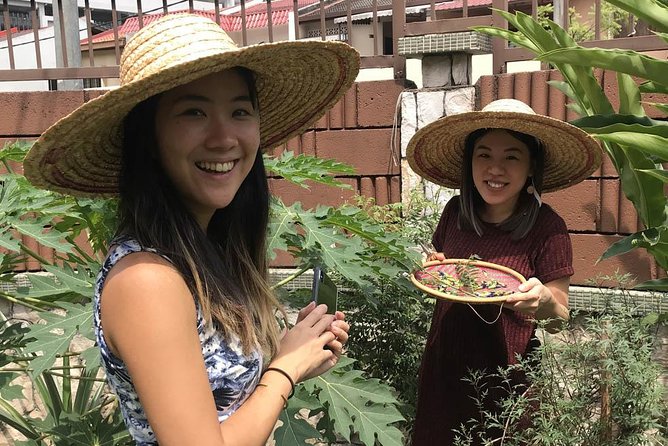
The garden tour is more than a pleasant walk around the property. Sara grows more than 50 herbs, spices, flowers, vegetables, and fruit used in everyday cooking. You can see, touch, smell, and taste local plants, including turmeric and curry leaves.
I like this part because it supplies context that a recipe card cannot. Curry leaves are easy to treat as a small green ingredient when you buy them in a packet. Seeing the plant helps connect the ingredient with the cooking tradition. The same is true of turmeric and the other plants used in Malaysian food.
The garden also gives the class a sense of place. You are not learning a generic version of Southeast Asian cooking with ingredients chosen only for convenience. You are learning about plants that grow in a Malaysian home garden and appear in local meals.
The garden visit will appeal most to cooks who enjoy ingredients and food culture. If you want to get straight to chopping and frying, this opening section may feel slow. Still, it is a useful part of the experience, particularly if Malaysian herbs are unfamiliar to you.
Five Malaysian dishes, prepared by you
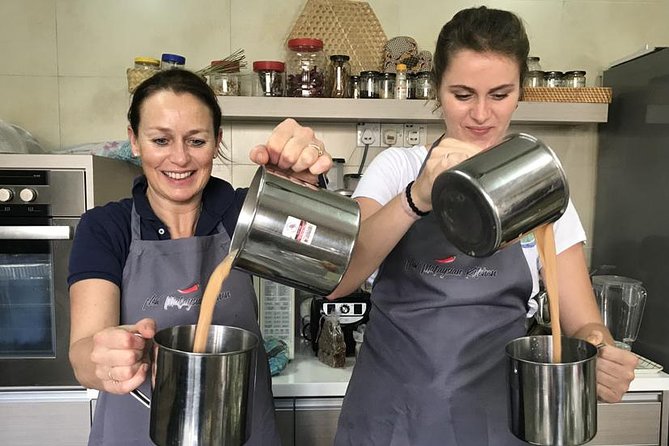
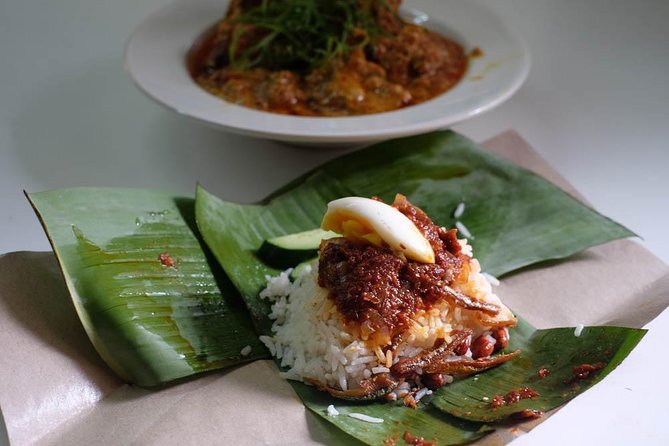
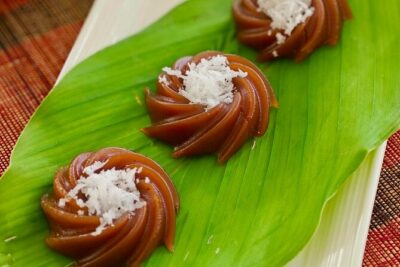
After the garden tour, you move into the kitchen to prepare five Malaysian foods of your choice. The available dishes can include classic home and street-food favorites. Past class combinations have included nasi lemak, chicken rendang, four-angled bean salad, teh tarik, and ondeh-ondeh.
The exact menu is not specified in advance here, so you should not expect every one of those examples at every session. The important point is that you make five dishes yourself and receive instruction throughout the process.
That flexibility is useful for mixed groups. Someone who wants to learn a full meal can choose several savory dishes, while another person may be more interested in a dessert or drink. If you have a particular dish in mind, it is sensible to ask about availability when booking or confirming the class.
The examples also show the range of the lesson. Nasi lemak introduces one of Malaysia’s best-known rice dishes. Rendang teaches the slow-building flavor of a spiced preparation. Four-angled bean salad brings a fresh vegetable element, while teh tarik adds a drink technique and ondeh-ondeh offers a sweet finish.
You are working in a real Malaysian kitchen, so this is not a polished stage show built around identical stations. That can be part of the charm, but it also means the experience is more home-style than restaurant-school formal. Expect practical instruction, conversation, and hands-on work rather than a strict professional certification course.
Why Sara’s teaching style matters
Cooking classes can fail when the instructor assumes too much. That does not appear to be the concern here. Sara’s teaching is described as careful, clear, encouraging, and patient, with attention given to each stage of the recipes.
That is especially helpful if you rarely cook. One class participant with very little cooking experience was still able to complete a dish with Sara’s help. You do not need to arrive as an experienced home cook to get value from the session.
Sara’s cookbook background adds another useful layer. She can explain not only what to do, but why a recipe works and how it fits into Malaysian food culture. The discussion may cover ingredients, household cooking, and local lifestyle as you work.
Her mother’s presence is another appealing detail. Cooking with a local family gives the session a personal quality that a restaurant kitchen cannot easily copy. You may learn as much from the casual conversation about Malaysian meals and family routines as from the formal recipe steps.
The class is still best suited to people who want to participate. If you prefer to sit back while someone else does the work, you will miss the main value. The point is to chop, mix, cook, and ask questions.
More hands-on workshops in Kuala Lumpur:
- Batu Caves and Sari Experience with Batik Workshop
★ 5.0 · 181 reviews - Batik Coloring Workshop by myBatik
★ 5.0 · 48 reviews - Batik Bag Painting Workshop by myBatik
★ 5.0 · 35 reviews - Malaysian Hands-On Cooking Class : Masala Medley
★ 5.0 · 24 reviews
Eating what you made
The final stage is a shared meal featuring the food prepared during class. This is a satisfying finish, but it also serves a practical purpose: you taste the results while the methods and ingredients are still fresh in your mind.
Eating together gives you a chance to compare the dishes and talk with Sara and her family about Malaysian food, culture, and lifestyle. The meal is not just a reward for completing the cooking. It helps you understand how the recipes function as part of a larger meal.
I especially like that the food you eat is connected to the work you have just done. You can look back at the steps, ask why a flavor came out a certain way, and think about how to adjust the recipe at home.
The meal is likely to be more relaxed than a restaurant tasting menu. That suits the family-home setting, though anyone expecting a formal dining service should set expectations accordingly. This is a cooking lesson followed by a shared home meal, not a separate fine-dining event.
The recipe booklet makes the class useful later
You receive a recipe booklet to take home. That small detail adds real value because the class includes five dishes, and remembering every proportion or sequence after a busy morning is difficult.
The booklet also turns the experience into something you can share. You can prepare Malaysian food for family or friends after your trip, using the lesson as a starting point rather than relying on memory.
For a first-time cook, the booklet is a practical reminder of the class. For an experienced cook, it offers a base for experimenting with the Malaysian flavors introduced during the morning.
The strongest value here is not the booklet by itself. It is the combination of the booklet, hands-on practice, and the chance to ask Sara questions while cooking. You leave with written guidance and a better sense of how the dishes should look and taste.
Is $150 per person a fair price?
The cost is $150 per person, which is high compared with many basic cooking classes in Kuala Lumpur. The price makes more sense when you consider what is included: about four hours, a garden tour, a meal, instruction from a cookbook author, a small group capped at six, and a recipe booklet.
You are also paying for access to a private family setting rather than a large class designed to handle many people at once. The one-to-one attention is important here. If Sara spends time helping you with a dish or answering questions about ingredients, the small group allows that without holding up a room full of participants.
Still, value depends on your interests. If you mainly want to eat Malaysian food, you can find less expensive ways to do that in Kuala Lumpur. If you want to learn recipes you can make at home and enjoy a personal conversation about food culture, the price is easier to justify.
This is a better choice for an enthusiastic cook than for someone looking for a quick tourist activity. It also works well as an early Kuala Lumpur experience because it can help you recognize ingredients and dishes during the rest of your visit.
Timing, location, and what to plan for
The class runs Monday through Friday from 9:00 a.m. to 1:00 p.m. It ends back at the same meeting point in Taman Len Seng. The home is about 20 minutes from the city, and the location is near public transportation.
The weekday-only schedule is the biggest practical limitation. If your Kuala Lumpur stay falls over a weekend, this class will not fit unless the operating schedule changes. It is also worth allowing time to reach a neighborhood outside the central tourist areas.
Bookings are often made about 32 days ahead, so I would not leave this until the last morning of your trip. Confirmation is sent within 48 hours, subject to availability. The mobile ticket is convenient for a phone-based booking.
You can cancel for a full refund up to 24 hours before the start time. Cancellations or changes made less than 24 hours ahead are not accepted for a refund, with cut-off times based on local time.
Who will enjoy this class most?
I would choose this for you if you enjoy cooking, want a small group, and prefer meeting a local family to visiting a standard tourist kitchen. It is also a good fit if you want Malaysian recipes that can be prepared at home after the trip.
It suits couples, friends, and families who are happy to work together. The small group format also helps solo participants, since you are likely to have room for conversation without being lost in a large crowd.
The class may be less suitable if you need a weekend activity, want a central Kuala Lumpur location, or dislike hands-on cooking. It is also not the best match if you expect a fixed menu listed in advance, since the format allows you to choose five dishes and the exact options are not stated.
Should you book New Malaysian Kitchen?
Book it if you want more than a meal and are willing to pay for personal instruction, a family setting, and practical recipes. The garden-to-kitchen connection is the experience’s strongest feature, and Sara’s patient teaching should help both beginners and experienced cooks get something useful from the morning.
Skip it if your budget is tight or your schedule only allows weekends. For everyone else, this is a thoughtful way to spend a morning outside central Kuala Lumpur, especially if you want to return home able to make nasi lemak, rendang, or other Malaysian dishes rather than simply remember eating them.
FAQ
Where does the cooking class take place?
The class takes place at New Malaysian Kitchen, No. 2, Jalan 11, Taman Len Seng, 56000 Kuala Lumpur, Malaysia.
How long does the experience last?
The experience lasts approximately four hours, from 9:00 a.m. to 1:00 p.m.
How far is the cooking school from Kuala Lumpur?
The cooking school is described as being about 20 minutes from the city and is near public transportation.
Who teaches the class?
Sara Khong teaches the class. She is a professional cook and author of four Malaysian cookbooks. Her mother may also take part in the family-home cooking experience.
How many people can join?
The activity has a maximum of six travelers.
What happens during the garden tour?
You explore an organic edible garden with more than 50 herbs, spices, flowers, vegetables, and fruit used in everyday cooking. The tour includes opportunities to see, touch, smell, and taste plants such as turmeric and curry leaves.
How many dishes will I cook?
You will prepare five Malaysian foods of your choice.
What kind of food might be prepared?
Examples associated with the class include nasi lemak, chicken rendang, four-angled bean salad, teh tarik, and ondeh-ondeh. The exact selection is not specified in advance.
Is food included after the cooking lesson?
Yes. You finish by sharing a meal made from the food prepared during the class.
Is cancellation free?
You can cancel for a full refund up to 24 hours before the experience start time. Cancellations or changes made less than 24 hours before the start time are not accepted for a refund.
Just added around Kuala Lumpur
- Sunway Lagoon Ticket (One Day Pass)★ 3.5 · 5 reviews
- Transit Tour Private Tour (Ex Port Klang Cruise Centre/KLIA 1 &2)★ 5.0 · 10 reviews
- Kuala Lumpur City & Batu Caves Temple Private Tour★ 4.5 · 3 reviews
- Private Port Klang Cruise to Kuala Lumpur City Tour★ 5.0 · 3 reviews
- Genting SkyWorlds Theme Park Tickets (Optional)★ 5.0 · 5 reviews
- Full Day Melaka Private Tour from Kuala Lumpur★ 4.0 · 5 reviews
- Kuala Lumpur International Airport Transfers★ 5.0 · 4 reviews
- Kuala Lumpur Airport To Kuala Lumpur City Hotels★ 4.5 · 8 reviews
Cooking Classes, compared.
Market Visit & Private Hands-on Cooking Class at Daun Senja
Read our review →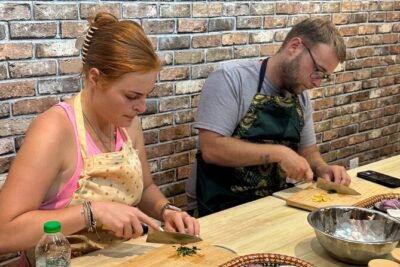
Malaysian Hands-On Cooking Class : Masala Medley
Read our review →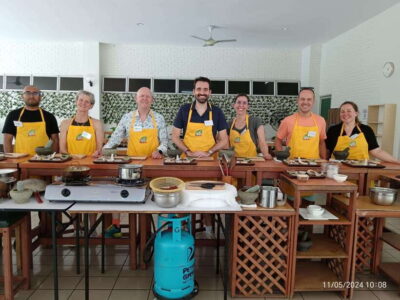
Browse the lists this tour appears in